Monday, September 05, 2005

New Orleans is sinking

My memory is muddy what's this river I'm inNew Orleans is sinking and I don't want to swim

sing the Tragically Hip.
The unfolding tragedy of New Orleans after Hurricane Katrina is one of human and personal loss, but begins to look more and more as if it will be a deep cultural loss.  This city so rich in music, life, people.

  • 'I'm just glad I saw it' New Orleans was the city of jazz, Faulkner and Tennessee Williams, the place where the US Bible Belt came unbuckled. Former New York Times editor Howell Raines laments the destruction of the Big Easy, and asks: why did President Bush do so little in response? Impassioned article in today's Guardian: http://www.guardian.co.uk/g2/story/0,,1560139,00.html

  • Profile of New Orleans, before Katrina (Boston Globe): http://tinyurl.com/7o86d
New Orleans in literature: New Orleans literary greats (http://tinyurl.com/ak2z8); John Kennedy Toole, A Confederacy of Dunces;

Blue notes
Jazz defines the magic of New Orleans, says Dave Gelly: September 04 2005, The Observer

'A bunch of us kids, playing, would suddenly hear sounds, but we wouldn't be sure where they were coming from. So we'd start trotting, start running - 'It's this way! It's that way!" The music could come on you any time like that. The city was full of the sounds of music.'
Guitarist Danny Barker, born in New Orleans in 1909, reminiscing half a century later.

Nostalgia may not be the best guide to the way things were, but until disaster overwhelmed it last week, New Orleans was indeed a unique and magical place. Tennessee Williams, in the opening stage direction of A Streetcar Named Desire, invokes the strange light at dusk, 'which invests the scene with a kind of lyricism and gracefully attenuates the atmosphere of decay'. To this he adds the sound of a 'blue piano' which 'expresses the spirit of the life which goes on here'. And it was music that made New Orleans famous. Historians now argue about whether it really was the sole birthplace of jazz, but from King Oliver to Wynton Marsalis the city certainly gave birth to a glorious lineage of musicians. They moved on to advance their careers, but when the subject of their native city came up most of them could talk all night, evoking a kind of lost paradise, where music was as ubiquitous as the humid air, smothering poverty, violence and squalor in its sweet, moist embrace.

No matter what age they are, New Orleans-born musicians always seem able to play together like brothers, which is remarkable in a form of music obsessed with categories and styles. Some years ago, on a steamy July afternoon in the Market area of the city, I caught the sound of a band in full cry. The dancing, clapping crowd was so thick that I could not see them at first, until the crowd parted and I caught a fleeting glimpse of the trumpet player. It may have had something to do with the way he was standing or holding the instrument, but for a moment I could have sworn I was looking at the young Louis Armstrong. He was in his late twenties, his name was Leroy Jones and his fellow musicians were old enough to be his grandparents.

One thread binding the generations is the irresistible New Orleans beat, a rolling two-in-a-bar with a touch of Caribbean syncopation. You could stroll down Bourbon Street any night of the year and the very sidewalk seemed to be moving to it. You hear it in the music of Jelly Roll Morton (born 1890), of Fats Domino (1928) and of Nicholas Payton (1973).

This whole tradition is based on informal music-making, much of it in the open air, and in recent times that has depended on the tourist trade. Musical skills have been passed down by a kind of casual, on-the-job apprenticeship, which means having jobs, which means having audiences. Will it survive? Touch and go, I'd say. But the physical remains - the run-down corner shop which was once a famous saloon, the few rickety sheds which are all that survive of Storyville, the red-light district where the boy Armstrong used to deliver coal - they've gone for good.


Saturday, March 05, 2005

Angelopoulos: The Weeping Meadow


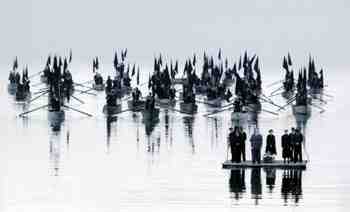
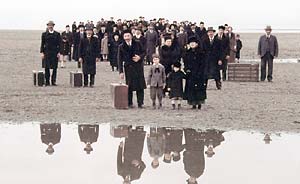
Weeping Meadow: opening sequence

Last night to FACT for the first part of Angelopoulos' planned Trilogy - and what a masterpiece! Possibly greater than the Travelling Players. Sheer visual poetry.

In 1919, Greek refugees from Odessa arrive in Greece, among them Spyros; his wife, Danae (Thalia Argyriou); their son; and a younger orphan girl called Eleni. They are given land beside a river and build a village. Some years later, Spyros is prospering but Eleni, who has become pregnant by Spyros’ son, returns after a secret birth. Her twin babies, Yorgis and Yannis, have been adopted. When Danae dies shortly afterwards, Spyros becomes obsessed with Eleni and a marriage is arranged. But Eleni flees the ceremony with Spyros’ son and, with the help of travelling musicians led by violinist Nikos, they flee to Thessaloniki.

That's the story: but it's the way it is told which is pure magic.


Weeping Meadow: the funeral flotilla

Angelopoulos on his films and Greek Myth (from Artificial Eye pack):

I do not believe that my films are pessimistic. There may be a slight sense of melancholy, but I would never characterize it as pessimism. On the other hand, I dislike the words pessimism and optimism. I try to see clearly. My generation, and all those who lived through the adventure called post-war history and hope for a new world, witnessed a series of disappointments. The changes that came to the world brought no results, nor opened the way as we had expected. Our feeling of melancholy is the dignity of the heart facing the defeat of a vision...

I do not know why, this is my personal view of the world. Even in my owncountry I feel like an exile. I find myself in a kind of internal exile. I have not yet found my home, and by that I mean a place where I am in harmony with me and myself, with myself and the world. My temporary home may be sitting next to someone driving a car with the landscape fleeing behind the windowpane. I feel that I find there a lost sense of balance. It is the only home that accepts me and that I accept... The past is not past. This triple dimension of time, past, present, future, for me does not really exist. The past is only past in time; in reality, in our consciousness, the past is present, and that which we call future is nothing else than the dreamlike dimension of tomorrow experienced in the present...

Music in my films does not accompany the narrative musically. It is a dramaturgical element, it narrates, it participates, it is an integral part of the films' text. Without it, there would be a lack of something essential. In this sense music is an actor in the movie, a living element. In most of my films, the music belongs to someone, emerges from someone, constitutes his obsession. Sometimes dreamlike, sometimes a broken voice, sometimes fragmented speech, sometimes a symphony, sometimes an expression, sometimes the pursuit of the unsaid. The composer sits at the piano, we work together, we listen, we make changes, we change tone and range, I stop her while she improvises, I single out musical phrases that she then reworks into a finished melody. Musical instruments are introduced. The musical landscape is fragmented in order to be pieced together again and transformed, in this way, into the final result...

Often in my films, there is rain, mist, winter, snow, a pact with winter. Why? I couldn't say why. What I can say though is that the landscape you see is not an external one, it is an internal landscape, most of the mist is created by me, most of the rain is artificial rain, the snow is mostly artificial snow, the colors of the houses are recreated, and the choice of locations does not correspond to a particular geography, it reflects internal landscapes.

Greek myths, Greek mythology is a history we learn at school, we live with it; it has influenced our daily life. Greece is a country full of ancient stones, ancient temples in ruins, lost civilizations, that left in their wake texts and broken stones. This is something we discovered as soon as we opened our eyes, at our first moment of awareness, something that we grew up with. We have learned to love ancient stones, and the myths through which our personal history has passed, continues to pass and to be filtered...

In what concerns my age and experience, I have emerged from a period of Greek history that included the 2nd World War and the ideological conflicts of my generation. I have inevitably been influenced by all this. Historical events are not detached from us, they are inside us, they determine, influence, shape our life, our way of thought, our perspective. How do I feel in Greece? Strange. At times very close to her, but to a Greece of my own, an internal Greece that probably does not exist, but it is this Greece that often reconciles me with modern Greece, which wounds me to an unimaginable degree...

I consider myself a thinking individual, and since the problems of mankind remain the same since the creation of the world, and the questions of mankind are the same and still remain unanswered, I believe that all the questions, thoughts, and the philosophical view of the world present in my films, are nothing more than a repetitive reinstatement of these age-old questions about eros, death, birth, dreams, the perspective of a better world, youth and old age, love.. . La condition humaine, the fate of man.

I would like the world to remember my work as a musical moment, as a musical phrase, suspended, that may reach some people. The important thing in my life is what I do, my work, what I see, feel, what I dream of. At this moment all my thoughts are reflections in a mirror. At some point, tomorrow, or the day after, when shadows will acquire an outline, when the tear
becomes a river, another story may be born, yet another story of mankind...

Speaking about me once Tonino Guerra said that I am a valley that sheds little teardrops on the grass, that join together and become water, a stream that flows away to join the great river.

December of '44, the civil war broke out. My family divided into two factions, some siding with the leftists and the others, like my father, an old liberal, with the old order of things. The battle of Athens. 33 days. A battle that turned into a slaughter. My father tried to maintain a neutral stance, one that was almost critical of both sides. But in vain. He was arrested by the leftist rebels led by my cousin and taken outside the city to be executed. For days my mother and I searched for his body among the hundreds of others lying scattered about in muddy fields and abandoned building sites. I can still feel her trembling hand in mine. With the defeat and retreat of the Democratic Army, the army of the rebels, towards northern Greece, we learned that they had taken him with them as a hostage like hundreds of others. In my days here in Greece Homer and the ancient tragic poets constituted part of the school curriculum. The ancient myths inhabit us and we inhabit them. We live in a land full of memories, ancient stones and broken statues. All contemporary Greek art bears the marks of this
coexistence.

It would be impossible for the path I have followed, the course I have taken, for my thinking not to have been infused by all this. As the poet says "they emerged from the dream, as I entered the dream. So our lives were joined together and it will be very difficult to part them again."

Sunday, February 27, 2005

How time flies

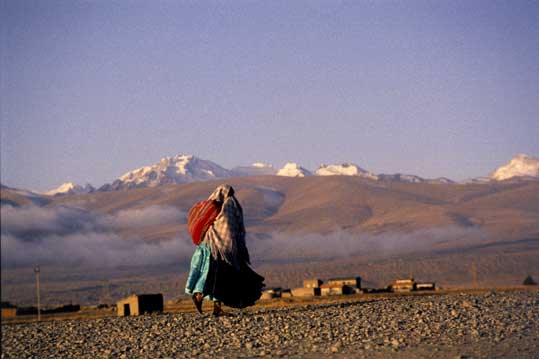
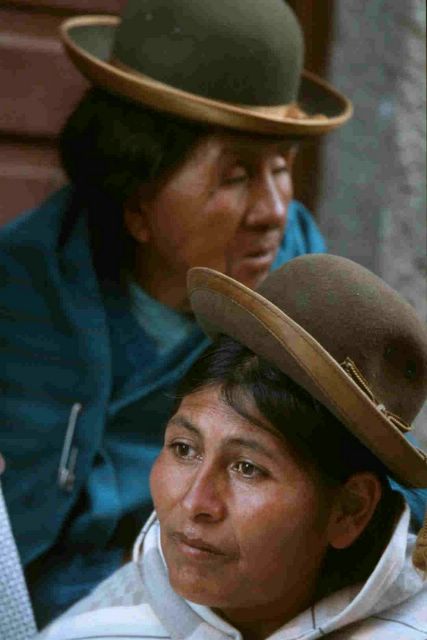
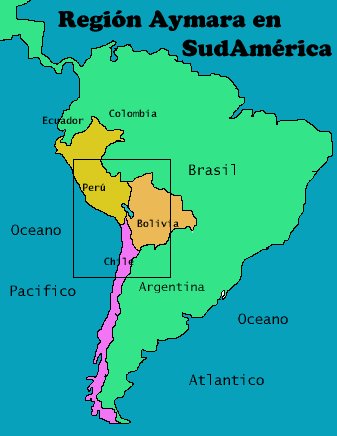
For the Aymara people living in the Andes, the past lies ahead and the future lies behind. Laura Spinney looks at how different languages reflect, and shape, our conception of time. An interesting article from today's Guardian.


Turner Whistler Monet


Entrance to the Turner Whistler Monet exhibition at Tate Britain

One of the highlights of our half-term trip to London was the Turner-Whistler -Monet exhibition at the Tate. We emerged from the exhibition and found ourselves in one of the canvases: a murky, dank and drizzly Thames-side evening.

JMW Turner, James McNeill Whistler and Claude Monet each changed the course of landscape painting. Whistler and Monet were friends and both initially acknowledged the profound influence of Turner, adopting and working their own variations on themes developed by their artistic predecessor. Turner’s atmospheric effects gave rise to Whistler’s Thames Nocturnes, and both Turner and Whistler informed Monet’s revolutionary paintings that went on to inspire the term Impressionism.
(Tate Britain exhibition introduction)

This exceptional exhibition focuses on views of the River Thames, the Seine and the city and lagoon of Venice – a rare opportunity to see works which were highly controversial in their own day but are now seen as some of the most poetic and evocative images ever produced.

  • Guardian: Paint me a river: It is the filthy, seductive soul of London. No wonder the Thames has transfixed - and defeated - artists for centuries. By Iain Sinclair
  • Guardian: Paintbrushes at dawn: It's hard not to see the Tate's Turner Whistler Monet show as a competition between the three great artists. Jonathan Jones picks his winner
  • Turner Whistler Monet: In the words of Henry Matisse, 'It seemed to me that Turner must have been the link between the academic tradition and impressionism'. This transition from Realism to Impressionism and beyond forms the backdrop of Turner Whistler Monet, an exhibition specifically aimed at establishing the visual and contextual connections undeniably linking JMW Turner, James McNeil Whistler and Claude Monet.
  • BBC: In pictures: Turner Whistler Monet
  • Tate Britain: exhibition page
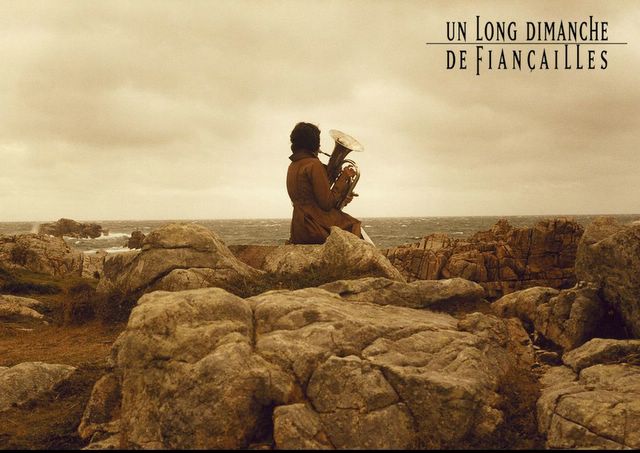
A Very Long Engagement


Original French film poster

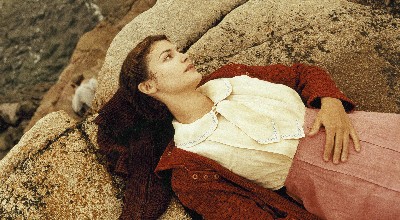
Enjoyed Jeunet's new film A Very Long Engagement at FACT tonight.
"Jean-Pierre Jeunet, a film-maker best known hitherto for whimsy and surreal tricksiness [has directed the]...outstanding A Very Long Engagement.


Audrey Tautou, star of Jeunet's Amelie, plays Matilde, a young Breton orphan determined to discover whether her lover and childhood sweetheart, 19-year-old infantryman, Manech (Gaspard Ulliel), actually died after being sentenced to death for self-mutilation in 1917.

The movie is based on a novel by Sebastien Japrisot, a writer best known for his thrillers .

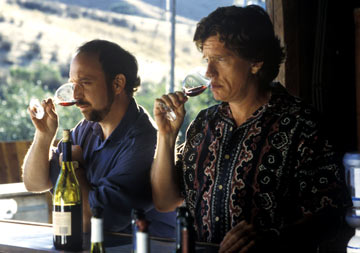
Sideways


Paul Giamatti and Thomas Haden Church in Sideways

We both enjoyed Sideways at FACT, where it's been a tremendous success. As the Guardian review commented, "ew classics of American cinema don't come along that often, so grab this one with both hands. It's an occasion for the singing of hosannas from the roof of every cinema.

Director Alexander Payne has already given us two gems with Election and About Schmidt. This glorious, bittersweet comedy of male friendship and midlife crisis is even better. ..
Sideways is beautifully written, terrifically acted; it is paced and constructed with such understated mastery that it is a sort of miracle. The observations are pitilessly exact and meshed with impeccably executed sight gags and funny lines, and everything is bathed in the solvent of exquisite sadness. Yet its gentleness and humanity do not preclude a mule-kick of emotional power. Audiences at the screenings where I have been present may have heard something like a fusillade of gunshots from the auditorium; it was the sound of my heart breaking into a thousand pieces."


Sideways poster
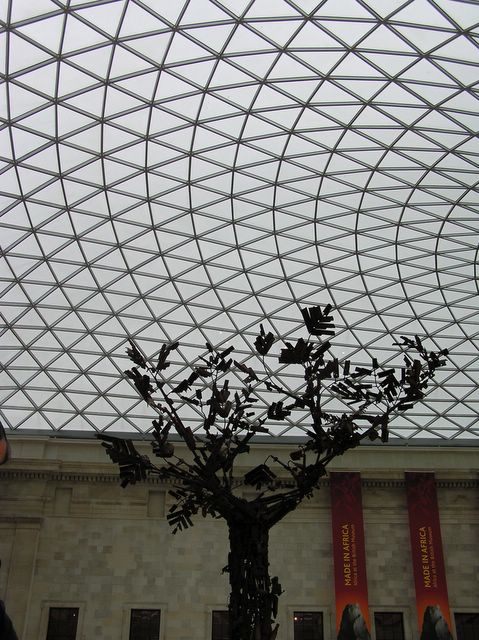
Tree Of Life at the British Museum


On our trip to London I went to see The Tree of Life - a sculpture assembled by Mozambiquen artists from guns decommissioned following the civil war. It was located in the stunning Great Court, with its glass domed roof. A week later we watched the moving documentary about the project on BBC 4, Tree of Guns.

"We are all Africans," says author Margaret Busby. And we are: Africa, as they say, is the cradle of our civilisation. When you enter the Great Court of the museum you are welcomed by weapons. However, they are not recognisable as weapons any more.

Decommissioned after the Mozambique civil war, they have been reworked into a Tree of Life, a large sculpture installed to initiate Africa 05, the UK’s biggest celebration of African cultures.
Yet as well as this product of the modern world, the British Museum offers the chance to see and even touch another extreme of civilisation: African hand axes of almost two million years old, quite possibly the first tools ever made.

"We have done something quite new in that we made the handling a permanent part of the exhibition," says MacGregor. "We hope that every visitor will be able to hold these objects because that’s really how you realise the link to those first makers.

  • British Museum press release
  • Gun sculpture unveiled by museum : BBC News
  • Africa at the British Museum: "The Tree of Life was made by Christavao Canhavato (Kester), Hilario Nhatugueja, Fiel dos Santos and Adelino Serafim Mate of the Nucleo de Arte, Mozambique. The sculpture is made out of weapons and was commissioned by the British Museum and Christian Aid through the Transforming Arms into Tools programme: people hand in guns from the civil war in exchange for sewing machines, bicycles, even tractors. The weapons are then dismantled and the artists make sculptures out of them."
Turks: A Journey of A Thousand Years


Mehmed II c1480.
Attributed to Shiblizade Ahmed


Pretty much the highlight of our trip to London for me was Turks: A Journey of A Thousand Years at the Royal Academy. The exhibition explores the art and culture of the Turks from Inner Asia to the Bosphorus over a thousand year period between 600 and 1600 AD. Their journey incorporated many different centres of power and artistic traditions. The story begins with the Uighurs, a nomadic people of Central Asia and China, and ends with the Ottoman Empire from the reign of Mehmet II to Suleyman the Magnificent including the fall of Byzantium and the spread of Ottoman rule to include Mecca and Medina.


Horse Drinking Water and Two Nomads 14th century, Central Asia.
Later attributed to Muhammad Siyah Qalam.


One of the highlights of the exhibition is a stunning set of drawings never before seen in public, the work of the 16th-century artist Muhammad Siyah Qalam (Muhammad of the Black Pen).
  • Turks - A Journey of a Thousand Years 600 - 1600: Royal Academy site
  • Three characters in search of an artist: Novelist Orhan Pamuk lets the art speak for itself as he creates an imaginary dialogue between the figures in the enigmatic drawings of Muhammad of the Black Pen (RA Magazine)
  • Royal Academy offers a Journey of a Thousand Years: 24 Hour Museum
  • Full of eastern promise: The Ottoman empire was one of the mightiest the world has ever known. Can the Royal Academy's new exhibition do it justice? (Guardian)
  • Caravaggio: The Final Years


    The Beheading of Saint John the Baptist 1608

    The National Gallery's exhibition of Caravaggio's late works will be one of the biggest shows of the year. The exhibition Caravaggio: The Final Years explores the painter's late works when, after killing a man in a duel, he was forced to flee Rome at the height of his career. The Guardian came up with a special issue in which Jonathan Jones set out to see every known Caravaggio in existence. On the way he built up a unique portrait of the brawling, philandering gangster who created some of his greatest work on the run, wanted for murder.

    Life after a lonesome death


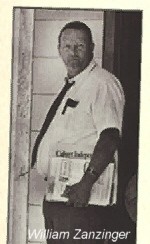
    Interesting article by Ian Frazier in today's Guardian that traces the true story behind the lyrics of Bob Dylan's song.

    On February 9 1963, William Zantzinger, a rich young farmer, struck Hattie Carroll, a black barmaid, with his cane. She died that night; he got six months. Her story lives on in Bob Dylan's brilliant protest song - but where is Zantzinger now? And did The Lonesome Death of Hattie Carroll really change anything?

    Sunday, January 02, 2005

    Best of The Guardian 2004

    Two collections of best articles from the Guardian last year - one chosen by readers (including Why I love ... the noise of ducks landing and Jonathan Freedland's article, Tony Blair's survival is an affront to our constitution) and another selection made by Martin Wollacott, editor of Guardian Year 2004.

    Saturday, January 01, 2005

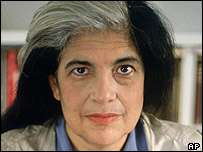
    Susan Sontag dies


    Susan Sontag

    Susan Sontag died on December 28. This year I read On Photography and Regarding the Pain of Others.

    Sontag aroused controversy for remarks in The New Yorker (September 24, 2001) about the immediate aftermath of the September 11th, 2001 attacks. She wrote:

    "Where is the acknowledgment that this was not a 'cowardly' attack on 'civilization' or 'liberty' or 'humanity' or 'the free world' but an attack on the world's self-proclaimed superpower, undertaken as a consequence of specific American alliances and actions...[I]f the word "cowardly" is to be used, it might be more aptly applied to those who kill from beyond the range of retaliation, high in the sky, than to those willing to die themselves in order to kill others. In the matter of courage (a morally neutral virtue): Whatever may be said of the perpetrators of Tuesday's slaughter, they were not cowards."

    In the 1990s Sontag travelled to the then Yugoslavia, calling for international action against the growing civil war. She visited the besieged Bosnian capital Sarajevo in 1993, where she staged a production of the play Waiting for Godot. Two days after her death, the mayor of Sarajevo announced the city would name a street after her, calling her an "author and a humanist who actively participated in the creation of the history of Sarajevo and Bosnia."


    Wednesday, December 29, 2004

    Good exhibition - great find!


    Alec Soth: The boyhood home of Johnny Cash

    Today went with Sarah to see the Alec Soth exhibition at Open Eye, Sleeping By The Mississippi. Enjoyed the photos that intertwine landscape detail with objective portrayal of the human characters encountered, very much in the style of William Eggleston. But the great surprise was finding a small pile of sale copies of Robert Frank's The Americans, a book that I'd been searching for unsuccessfully for the past two months or so.

    Wednesday, November 24, 2004

    Rivers and Tides

    Saw the new Andy Goldsworthy film at the Phil - almost the definitive collection, a beautifully filmed resume of his key themes:

    Sunday, November 21, 2004

    A remarkable film

    Just seen on video: Letters From A Dead Man, a 1986 film by the Russian director, Konstantin Lopuchansky (an assistant on Tarkovsky's Stalker). Set in a post-nuclear war Russian city, where a group of survivors are sheltering in the basement of a museum. Shot in sepia. Remarkable closing sequence where a group of young children set out walking into the apolcalyptic future.

    Saturday, November 20, 2004

    The left, as history knew it, is dead - and it will not be reborn

    An interesting article by Martin Jacques in today's Guardian analyses the impact of Tony Blair - inthe week that Michael Howard accused him of stealing the Tories' clothes.
    Previously unknown: Edwidge Danticat

    In today's Guardian Saturday Review: the profile of a novelist unknown to me, Edwidge Danticat. Novels to look out for include: The Dew Breaker, After the Dance and The Farming of Bones

    Sunday, October 24, 2004

    Jackson Browne at the Bridgewater

    On stage alone (apart from a rck of 15 guitars and keyboards) for close on three hours, Browne sang his way passionately through a huge back-catalogue stretching back over a quarter of a century:

    But it's a long way that I have come
    Across the sand to find this peace among your people in the sun
    Where the families work the land as they have always done
    Oh it's so far the other way my country's gone
    Across my home has grown the shadow
    Of a cruel and senseless hand
    Though in some strong hearts
    The love and truth remain
    (Our Lady Of The Well: his closing song)

    A fortnight before the US elections, a segment of the show featured his songs of political commitment:

    Don't you want to be there, don't you want to know?
    Where the grace and simple truth of childhood go
    Don't you want to be there when the trumpets blow
    Blow for those born into hunger
    Blow for those lost 'neath the train
    Blow for those choking in anger
    Blow for those driven insane
    ...
    Don't you want to be where there's strength and love
    In the place of fear
    (Don't You Want To Be There)

    Throughout the concert, Browne gave the impression of having no set list, seeming to respond instantly to shouted requests from the audience. But this was a probably an impression. Overall, this was a powerful and moving performance that took the audience on a generation's journey and reflected a soul still searching:

    Still I look for the beauty in songs
    To fill my head and lead me on
    Though my dreams have come up torn and empty
    As many times as love has come and gone
    ...
    I'm not sure what I'm trying to say
    It could be I've lost my way
    Though I keep a watch over the distance
    Heaven's no closer than it was yesterday
    And the angels are older
    They know not to wait up for the sun
    They look over my shoulder
    At the maps and the drawings of the journey I've begun
    (Farther On)

    Sunday, October 10, 2004

    Femi Kuti

    Last night at the Phil: Femi Kuti and his tremendous afrobeat orchestra and dancers.

    Saturday, September 18, 2004

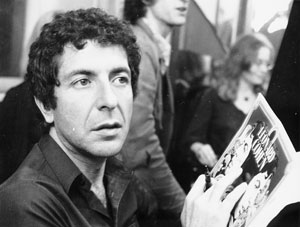
    Leonard Cohen at 70


    Hamburg 1974

    God...can he really be? How old am I? His are lyrics that have accompanied me through many different times:

    And Jesus was a sailor
    When he walked upon the water
    And he spent a long time watching
    From his lonely wooden tower
    And when he knew for certain
    Only drowning men could see him
    He said "All men will be sailors then
    Until the sea shall free them"
    But he himself was broken
    Long before the sky would open
    Forsaken, almost human
    He sank beneath your wisdom like a stone
    (Suzanne)

    And then leaning on your window sill
    he'll say one day you caused his will
    to weaken with your love and warmth and shelter
    And then taking from his wallet
    an old schedule of trains, he'll say
    I told you when I came I was a stranger
    I told you when I came I was a stranger.

    Ah you hate to see another tired man
    lay down his hand
    like he was giving up the holy game of poker
    And while he talks his dreams to sleep
    you notice there's a highway
    that is curling up like smoke above his shoulder.
    It is curling just like smoke above his shoulder.
    (Stranger Song)

    I loved you in the morning, our kisses deep and warm,
    your hair upon the pillow like a sleepy golden storm,
    yes many loved before us, I know that we are not new,
    in city and in forest they smiled like me and you..
    (Hey, That's No Way To Say Goodbye)

    I know you've heard it's over now and war must surely come,
    the cities they are broke in half and the middle men are gone.
    But let me ask you one more time, O children of the dusk,
    All these hunters who are shrieking now oh do they speak for us?
    And where do all these highways go, now that we are free?
    (Stories of the Street)

    Like a bird on the wire,
    like a drunk in a midnight choir
    I have tried in my way to be free.
    (Bird on a Wire)

    Oh let me see your beauty when the witnesses are gone
    Let me feel you moving like they do in Babylon
    Show me slowly what I only know the limits of
    Dance me to the end of love
    Dance me to the end of love
    (Dance Me to the End of Love)

    Now I've heard there was a secret chord
    That David played, and it pleased the Lord
    But you don't really care for music, do you?
    It goes like this
    The fourth, the fifth
    The minor fall, the major lift
    The baffled king composing Hallelujah
    (Hallelujah )

    I greet you from the other side
    Of sorrow and despair
    With a love so vast and shattered
    It will reach you everywhere
    And I sing this for the captain
    Whose ship has not been built
    For the mother in confusion
    Her cradle still unfilled
    For the heart with no companion
    For the soul without a king
    For the prima ballerina
    Who cannot dance to anything
    (Heart With No Companion)

    They sentenced me to twenty years of boredom
    For trying to change the system from within
    I'm coming now, I'm coming to reward them
    First we take Manhattan, then we take Berlin...
    (First We Take Manhattan)

    And I'll dance with you in Vienna
    I'll be wearing a river's disguise
    The hyacinth wild on my shoulder,
    My mouth on the dew of your thighs
    And I'll bury my soul in a scrapbook,
    With the photographs there, and the moss
    And I'll yield to the flood of your beauty
    My cheap violin and my cross
    And you'll carry me down on your dancing
    To the pools that you lift on your wrist
    Oh my love, Oh my love
    Take this waltz, take this waltz
    It's yours now. It's all that there is
    (Take This Waltz - after Lorca)

    Everybody knows that the dice are loaded
    Everybody rolls with their fingers crossed
    Everybody knows that the war is over
    Everybody knows the good guys lost
    Everybody knows the fight was fixed
    The poor stay poor, the rich get rich
    That's how it goes
    (Everybody Knows)

    Well my friends are gone and my hair is grey
    I ache in the places where I used to play
    (Tower of Song)

    I said to Hank Williams: how lonely does it get?
    Hank Williams hasn't answered yet
    But I hear him coughing all night long
    A hundred floors above me
    In the Tower of Song
    (Tower of Song)

    Give me back the Berlin wall
    give me Stalin and St Paul
    I've seen the future, brother:
    it is murder.
    Things are going to slide, slide in all directions
    Won't be nothing
    Nothing you can measure anymore
    The blizzard, the blizzard of the world
    has crossed the threshold
    and it has overturned
    the order of the soul
    (The Future)

    Ah the wars they will
    be fought again
    The holy dove
    She will be caught again
    bought and sold
    and bought again
    the dove is never free.
    Ring the bells that still can ring
    Forget your perfect offering
    There is a crack in everything
    That's how the light gets in.
    (Anthem)

    It's coming through a hole in the air,
    from those nights in Tiananmen Square.
    It's coming from the feel
    that this ain't exactly real,
    or it's real, but it ain't exactly there.
    From the wars against disorder,
    from the sirens night and day,
    from the fires of the homeless,
    from the ashes of the gay:
    Democracy is coming to the U.S.A.
    (Democracy)

    It's coming to America first,
    the cradle of the best and of the worst.
    It's here they got the range
    and the machinery for change
    and it's here they got the spiritual thirst.
    It's here the family's broken
    and it's here the lonely say
    that the heart has got to open
    in a fundamental way:
    Democracy is coming to the U.S.A.
    (Democracy)

    If it be your will
    If there is a choice
    Let the rivers fill
    Let the hills rejoice
    Let your mercy spill
    On all these burning hearts in hell
    If it be your will
    To make us well
    And draw us near
    And bind us tight
    All your children here
    In their rags of light
    In our rags of light
    All dressed to kill
    And end this night
    If it be your will
    (If It Be Your Will)

    • Guardian feature (17 September 2004). From which this endearing quote, 1994:
      "If you're going to think of yourself in this game, or in this tradition, and you start getting a swelled head about it, then you've really got to think about who you're talking about. You're not just talking about Randy Newman, who's fine, or Bob Dylan, who's sublime, you're talking about King David, Homer, Dante, Milton, Wordsworth, you're talking about the embodiment of our highest possibility. So I don't think it's particularly modest or virtuous to think of oneself as a minor poet. I really do feel the enormous luck I've had in being able to make a living, and to never have had to have written one word that I didn't want to write.
      "But I don't fool myself, I know the game I'm in. When I wrote about Hank Williams 'A hundred floors above me in the tower of song', it's not some kind of inverse modesty. I know where Hank Williams stands in the history of popular song. Your Cheatin' Heart, songs like that, are sublime, in his own tradition, and I feel myself a very minor writer. I've taken a certain territory, and I've tried to maintain it and administrate it with the very best of my capacities. And I will continue to administrate this tiny territory until I'm too weak to do it. But I understand where this territory is."
    • LeonardCohen.com
    • The Leonard Cohen files